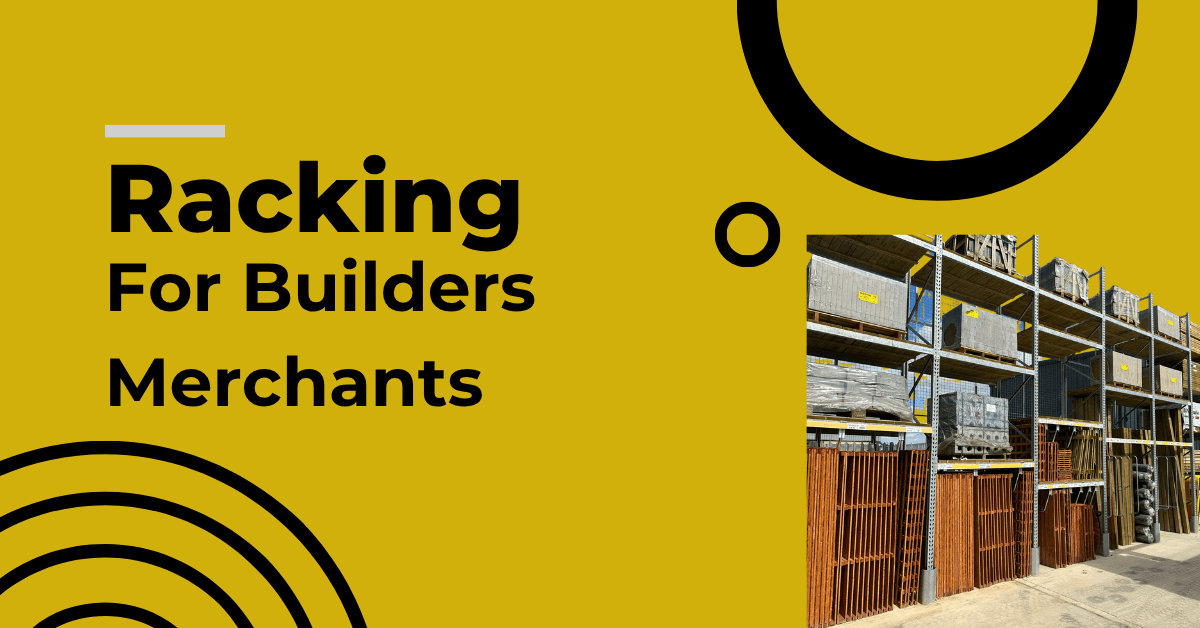

Racking for builders merchants is not like racking for a standard warehouse. And builders merchants storage is not a problem you can solve with one system.
You have heavy palletised stock sitting alongside full-length timber. Bagged cement next to copper pipe. Sheet materials a few metres from a hand-picked trade counter selling fixings and fittings. And most of that is moving in and out every single day, handled by forklifts, staff on foot, and customers who need to find what they want quickly.
Standard racking does not cut it. Not here.
The range of stock builders merchants carry is simply too varied. The environments – indoor warehouse, outdoor yard, shop floor – are too different. And the consequences of getting it wrong are too visible. Damaged stock. Slow pick times. Safety risks. A yard that looks chaotic when a customer walks in.
Getting the racking right means thinking about the whole site. Not just one product type, one area, or one system.
Table of Contents
Why Racking for Builders Merchants Is More Complex Than Most
Before you choose a racking system, it helps to understand what you’re actually dealing with.
A typical builders merchant site has to handle all of this at once:
- Heavy palletised materials – landscaping products, bagged cement and plasters, blocks, insulation
- Long and bulky items – structural timber, steel sections, copper pipe, PVCu, fence panels, concrete lintels
- Sheet and panel materials – plasterboard, OSB, cladding boards
- Mixed SKUs with completely different weights, lengths and turnover speeds
- Forklift traffic running alongside manual picking zones
- Indoor warehouse areas and external yards that are exposed to whatever the British weather decides to throw at them
That is exactly why racking for builders merchants has to be specified zone by zone, not bought off the shelf.
Which is why the most efficient builders merchant sites use a combination with each system matched to the specific product type and handling method in each zone.
The Racking Systems That Actually Work in a Builders Merchant
Cantilever Racking – The Workhorse of the Yard

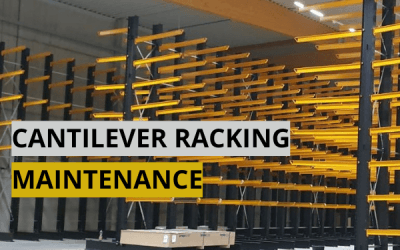
If you stock timber, steel, pipe, sheet materials or concrete lintels, cantilever racking for builders merchants is where you start.
Its open-arm design means no uprights running across the front of the bay. That matters when you are loading and unloading long, awkward stock with a forklift. You can access individual packs or lengths without disturbing anything else. Stock rotation is cleaner. Damage is reduced. And the yard looks organised, which matters more than people admit when trade customers are walking through.
For outdoor use, galvanised cantilever racking is the right choice. Powder-coated finishes are fine inside a warehouse, but external yard racking takes a beating from exposure. Galvanised steel holds up.
Internal cantilever racking in a warehouse works equally well for sheet materials and panels, where you need the same unobstructed access but in a controlled environment.
Adjustable Pallet Racking – For Everything Palletised

When it comes to racking for builders merchants, adjustable pallet racking is the go-to system for palletised stock. Bagged cement, plasterboard, insulation, landscaping packs, heavy block. All of it sits cleanly on pallet racking with selective access to every single position.
The flexibility is the point. Beam levels adjust as your stock profile changes. The system can be extended as the business grows. And because every pallet is individually accessible, stock rotation is straightforward without the complicated sequencing you get with drive-in or push-back systems.
That said, drive-in and push-back racking do have a place in builders merchant environments where you are holding high volumes of the same product. If you are stocking large quantities of a single SKU (say bagged sand or a particular block type) high-density systems can significantly increase the number of pallet positions within the same footprint.
For outdoor yard areas, galvanised pallet racking works the same way as galvanised cantilever. It has the same access benefits, built to withstand the elements.
Tool Displays – Putting Your Best Products Front and Centre
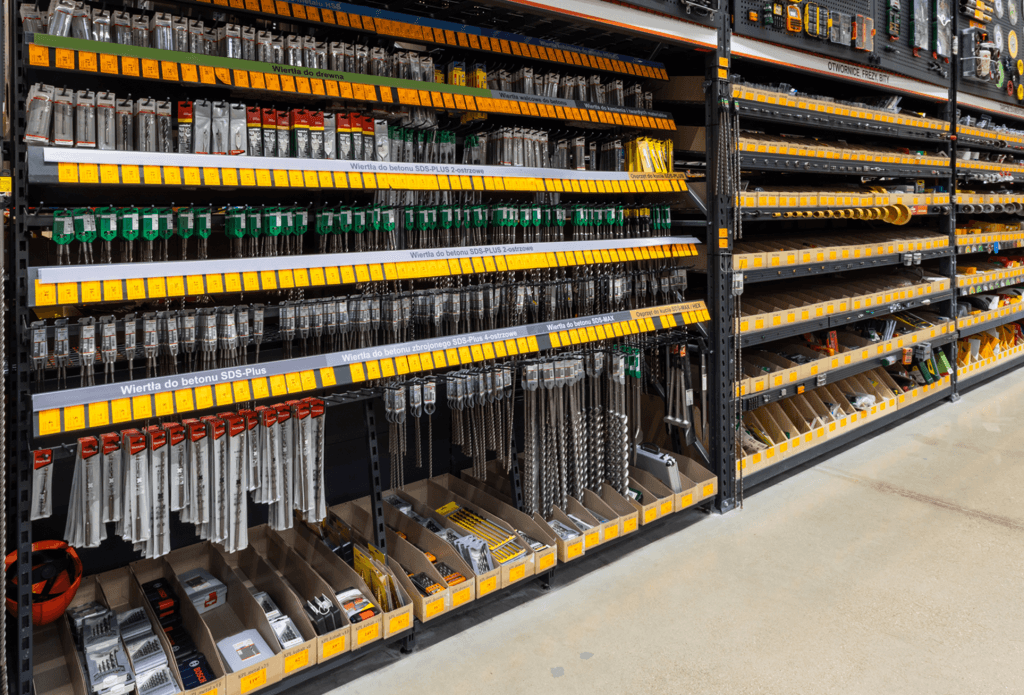
A dedicated tool display does two things. It makes high-margin products impossible to miss. And it tells the customer you take your retail environment seriously, which builds confidence in everything else you sell.
Whether you are displaying power tools, hand tools, or accessories, the display needs to do the selling for you. Clear sight lines. Products at eye level where it matters. Enough space around each item that nothing looks crammed in or afterthought.
Pegboard panels, slatwall systems and purpose-built tool display stands all work in different ways depending on your space and the volume of product you are showing. The right choice depends on your footprint, your product mix and how your customers move through the space.
What none of them should do is look like a stockroom shelf. Tool displays are a selling tool, not a storage solution. The difference between a product that sits and a product that sells is often just how it is presented.
Vertical Storage – A Space-Saving Alternative

For timber, metal bars, pipes and offcuts, vertical storage racking is worth considering where floor space is tight.
Instead of laying stock flat horizontally, vertical A-frame or slot-style storage stands it upright. That reduces the footprint considerably. It also improves visibility and staff can see the different profiles and lengths without having to move stock around to find what they need.
Trade Counter Shelving – From the Warehouse to the Shop Floor

Not everything in a builders merchant is heavy or long. A large proportion of revenue comes from the smaller stuff — fixings, fittings, plumbing parts, tools, adhesives, sealants, boxed hardware.
That stock needs different treatment. Trade counter areas and self-selection aisles work best with gondola shelving or widespan shelving, which give you clean, well-organised displays that are easy to shop. Gondola bays can be configured with accessories for small product merchandising. Widespan shelving handles heavier hand-picked items on the same system.
Four-post shelving at high level against walls is a useful option for bulk backup stock and it removes the need for a separate storeroom while keeping overflow organised and accessible.
The presentation here matters. Trade customers make quick decisions. If the shelving looks like a mess, they go elsewhere.
Indoor vs Outdoor – Getting the Finish Right
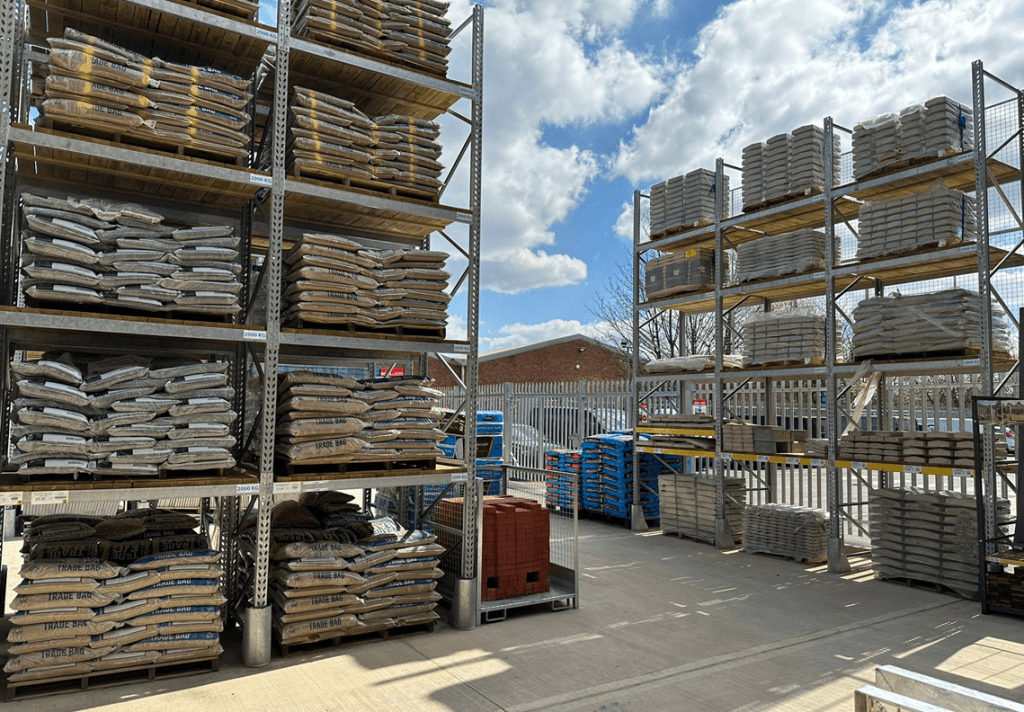
This is one of the most common mistakes made when specifying racking for builders merchants.
Internal racking – powder-coated steel. External racking – galvanised.
Galvanised racking costs more upfront. But it handles weather exposure without deteriorating, and replacing corroded external racking is far more expensive. Most sites need both finishes, and a decent supplier will spec each zone correctly from the start.
Frequently Asked Questions About Racking for Builders Merchants
What type of racking is best for a builders merchant?
Most merchants need a combination. Cantilever racking handles long, bulky materials – timber, steel, pipe, sheet products and lintels. Adjustable pallet racking suits palletised goods like bagged cement, landscaping products and insulation. Gondola or widespan shelving works for trade counter and hand-picked smaller items. The right answer depends on what you stock and how each zone operates.
Can racking be installed in an outdoor yard?
Yes. Galvanised pallet racking and galvanised cantilever racking are designed specifically for external use. They handle weather exposure without the structural deterioration you get with powder-coated finishes outdoors. If your yard racking is currently powder-coated, that is worth checking at your next inspection.
How does racking improve a builders merchant’s efficiency?
It comes down to stock visibility, pick speed and forklift route logic. When everything has a clear, designated location (and that location is matched to the product type) staff spend less time searching and more time serving. Damage decreases because products are stored correctly. And a well-organised yard or warehouse moves faster without adding headcount.
Does builders merchant racking need to meet safety standards?
Yes. All racking should be designed and installed to SEMA standards, that is the Storage Equipment Manufacturers Association, which sets the code of practice for adjustable pallet racking and storage equipment generally. Installers should be SEIRS-registered and inspectors SARI-qualified. If you are not sure whether your current installation meets those standards, a racking inspection will tell you quickly.
Can racking systems be expanded as the business grows?
Yes. Adjustable pallet racking and cantilever systems are modular. Beam levels can change, run lengths can extend, and layouts can be reconfigured without starting from scratch. That is actually one of the main arguments for getting the base specification right. A properly designed system gives you room to grow without expensive alterations.
What is the difference between internal and external racking finishes?
Powder-coated racking is suitable for internal warehouse environments. Galvanised racking is the appropriate choice for external yard storage, where ongoing weather exposure would corrode a standard powder-coated finish over time. Some sites use both, depending on where specific stock types are stored.
What to Look For in a Racking Supplier
A few things worth asking any supplier of racking for builders merchants before you commit:
- Are they SEMA full members? SEMA sets the design standards your racking should be built to.
- Do they offer a site survey? Any supplier worth working with should visit the site before designing anything. Every merchant is different. A survey is how you get a system that actually fits your space and stock profile, not a generic layout from a catalogue.
- Can they handle both the design and the installation? A supplier that does both is far easier to manage than coordinating separate design and installation teams.
- Do they offer ongoing inspection and maintenance support? Racking is a long-term asset. You want a supplier who will support it after the installation is complete and not one that disappears once the invoice is paid.
Getting racking for builders merchants right means thinking about the whole site
Builders merchant storage is not complicated, but it does require the right system in the right place.
Cantilever racking for your long products. Pallet racking for palletised goods. Gondola shelving for smaller products. Vertical storage where floor space is at a premium. Gondola or widespan shelving for the trade counter. Galvanised finishes for anything outdoors.
Each system doing what it is designed to do. Each zone working properly. The whole site moving as efficiently as it should.
At Ashford Retail Services, we design and install racking solutions built specifically for builders merchants, from the yard to the trade counter. If you want a site survey and a layout that actually works, get in touch.