

Builders Merchants Racking often evolves reactively, creating hidden inefficiencies that restrict storage capacity and increase operational risk.
Additional bays are installed during expansion. Different racking systems are introduced when stock increases. Repairs are made under pressure. Temporary adjustments become permanent fixtures.
Over time, this creates reactive infrastructure.
Reactive racking is rarely broken. It functions. It holds stock. It passes daily inspection.
But it often fails to support the business as it grows.
It slows teams down. It introduces avoidable risk. It limits storage capacity. It creates operational drag that compounds over time.
The issue is not always visible but the consequences are.
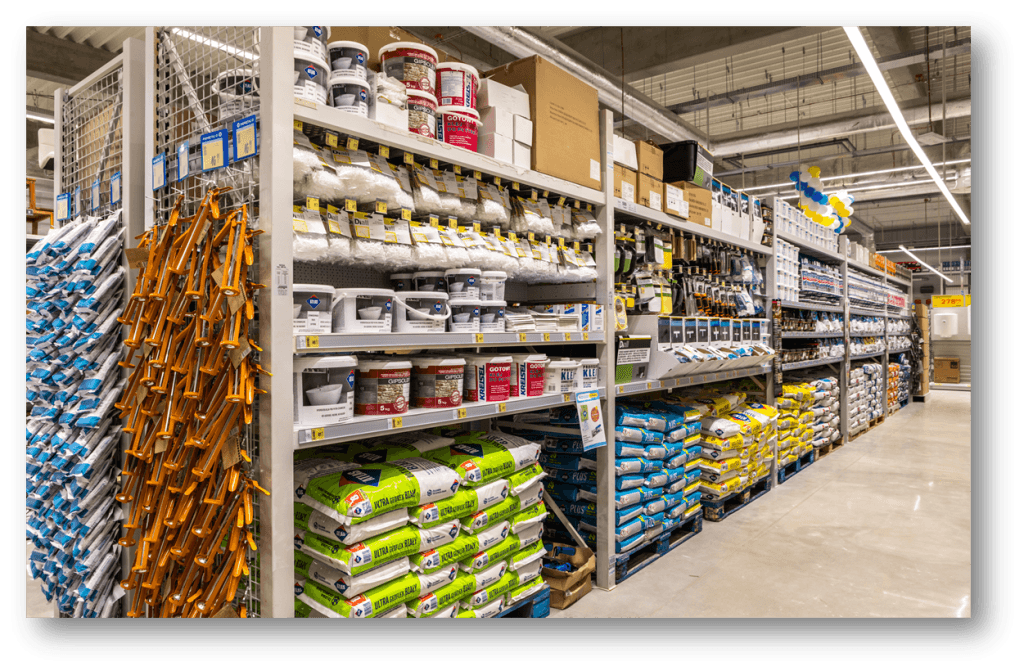
Table of Contents
The Compounding Cost of Inefficiency
Builders Merchants Racking is often reviewed only when something fails.
Failure is not the first warning sign. Friction is.
Stock takes longer to locate because layout evolved without structured layout designs. Forklift routes become congested as new lines of building materials are added. Vertical capacity sits unused because original pallet racking configurations were never redesigned around current stock requirements.
Small inefficiencies repeated daily create measurable impact.
If eight employees lose ten minutes per shift navigating inefficient layout, that equals more than twenty-six labour hours per month. Over a year, that becomes a significant operational cost.
Margin is rarely lost in one dramatic event. It erodes through repetition.
Risk Is Structural, Not Cosmetic
Damaged uprights that remain in use. Inconsistent load ratings across bays. Shelves carrying weight beyond design tolerance.
These are not surface-level concerns.
They are structural exposures.
Whether you are operating adjustable pallet racking, conventional racking or long span shelving, compliance must align with actual load demands. A single failure within a poorly maintained system can result in stock damage, injury and insurance complications.
In high-volume builders’ merchants environments, where heavy stock and bulk items move daily, reliable storage equipment is not optional.

Growth Often Fails at the Infrastructure Level
When storage tightens, many merchants assume they need more space.
Often, the issue is not square footage. It is structure.
Poor configuration prevents safe density increases. It complicates the introduction of new product lines. It slows seasonal reconfiguration. It disrupts flow between warehouse space and the trade counter.
Infrastructure that once supported growth begins to restrict it.
Without review, misalignment expands.
Choosing the Right Builders Merchants Racking Systems
Different product categories require different structural solutions.
Merchants handling long or awkward items such as timber and sheet materials often rely on cantilever racking systems. Properly specified cantilever racking, complete with reinforced cantilever arms and heavy-duty arms, allows safe handling of bulky stock without compromising access.
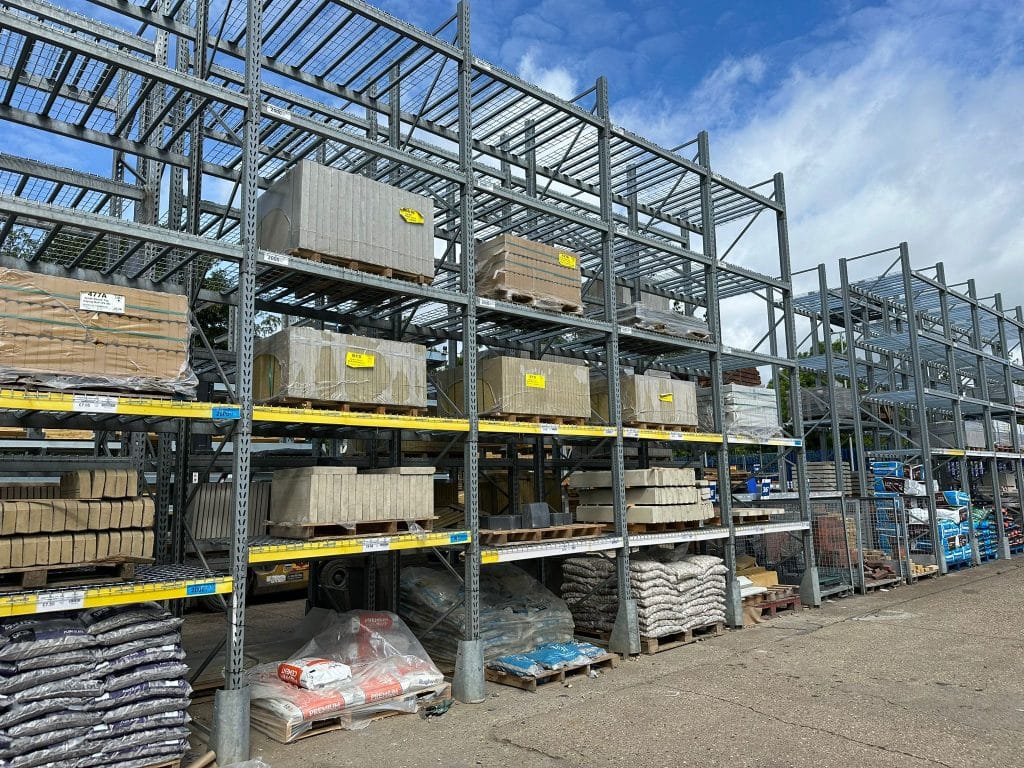
For palletised stock, adjustable pallet racking or even push-back racking can increase storage capacity while maintaining operational efficiency.
In customer-facing areas, gondola shelving or longspan shelving may support smaller product ranges, while bulk warehouse areas may require conventional racking built to higher load tolerances.
The point is not selecting equipment in isolation.
It is aligning pallet racking, cantilever racking systems and other storage equipment with your stock management approach, your stock requirements and your long-term growth strategy.
When racking systems reflect operational reality, inventory movement improves and space works harder.

The Missing Review Most Merchants Never Conduct
The core issue is rarely visible damage.
It is misalignment.
Stock evolves. Turnover increases. Product weight distribution shifts. Customer flow changes.
Infrastructure often does not.
At Ashford Retail Services, we conduct what we call an Infrastructure Alignment Review. This assessment evaluates structural integrity, compliance exposure, layout efficiency and growth constraints as one integrated system.
The objective is straightforward.
Is your racking aligned with where your business is going?
Not whether it is standing today.
Whether it will support the next phase of growth.
Retail operators are typically focused on certainty and procedure over technical explanation . That is why our approach follows a clear sequence: Assess, Plan, Install and Maintain.
Assessment identifies structural and operational gaps.
Planning aligns racking systems with stock management processes and operational flow.
Installation is controlled and minimally disruptive.
Maintenance prevents escalation.
Ashford’s client framework highlights efficiency, reliability and scalability as core operational priorities . Structured racking directly supports each of them.
Reactive Operator or Structured Operator
There are two operational mindsets in builders’ merchants.
The reactive operator fixes issues when they become unavoidable.
The structured operator identifies constraints before they create pressure.
The structured operator introduces new product lines without compromise. They increase storage capacity safely. They approach compliance inspections with confidence. They expand without redesigning under stress.
The difference is control.
Control creates stability.
Stability supports growth.
A Simple Question
When was the last time your builders merchants racking was reviewed against current operational demand?
Not repaired.
Reviewed.
If your racking systems have not been formally assessed in the last 12 to 24 months, you are operating on assumptions about load capacity, efficiency and compliance.
Assumptions are not strategy.
Ashford Retail Services installs, maintains and improves pallet racking, cantilever racking and integrated storage equipment solutions built for safety, efficiency and long-term scalability.
If you want clarity instead of guesswork, book an Infrastructure Alignment Review.
Ensure your infrastructure supports the business you are building, not the one you started with.